Designer Line The Mosaic Line
Introduction
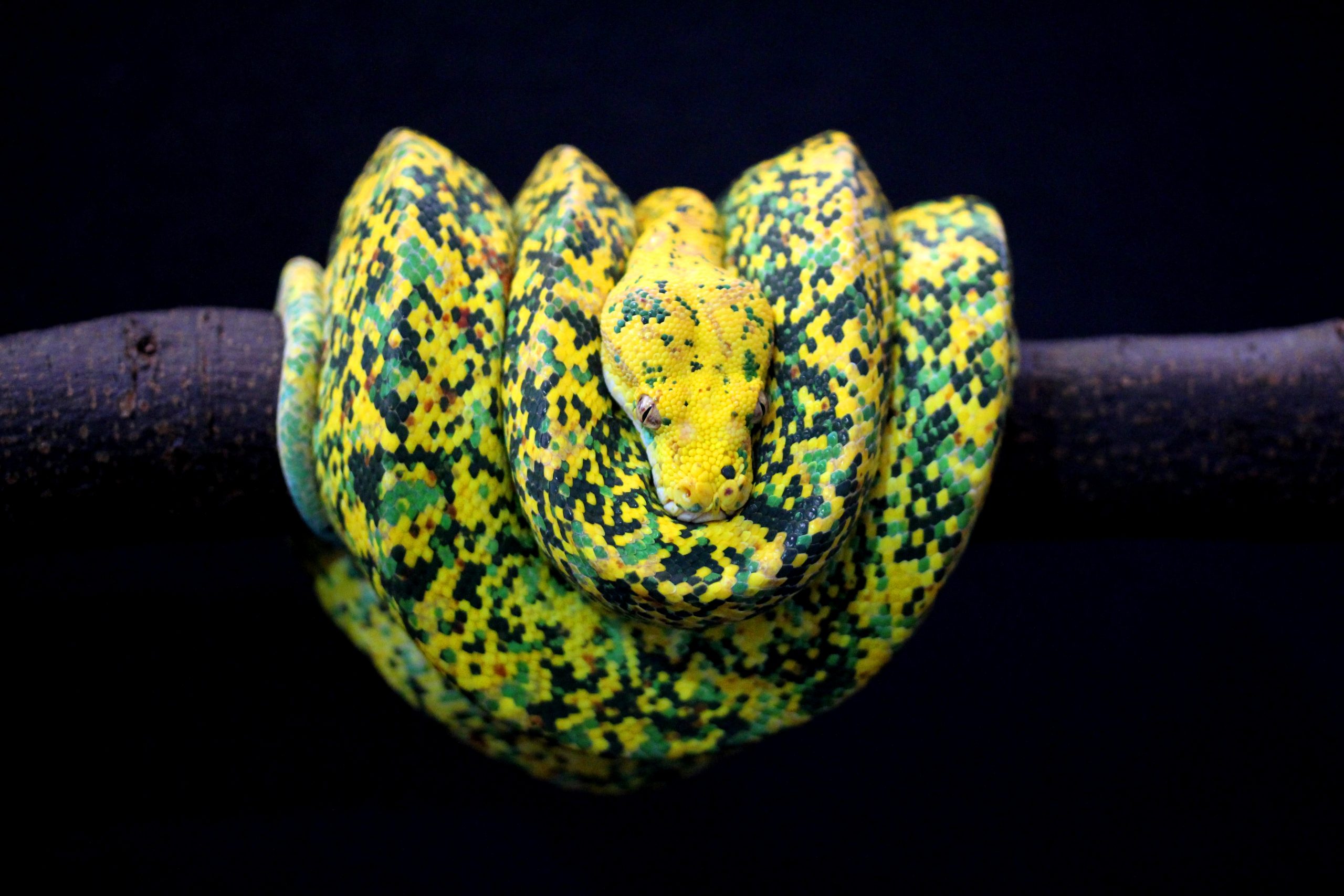
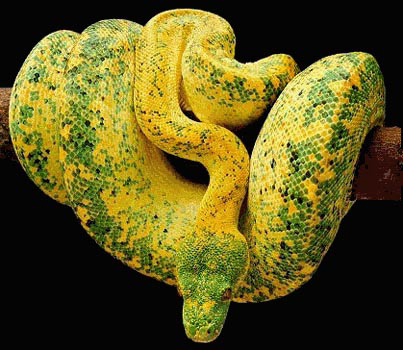
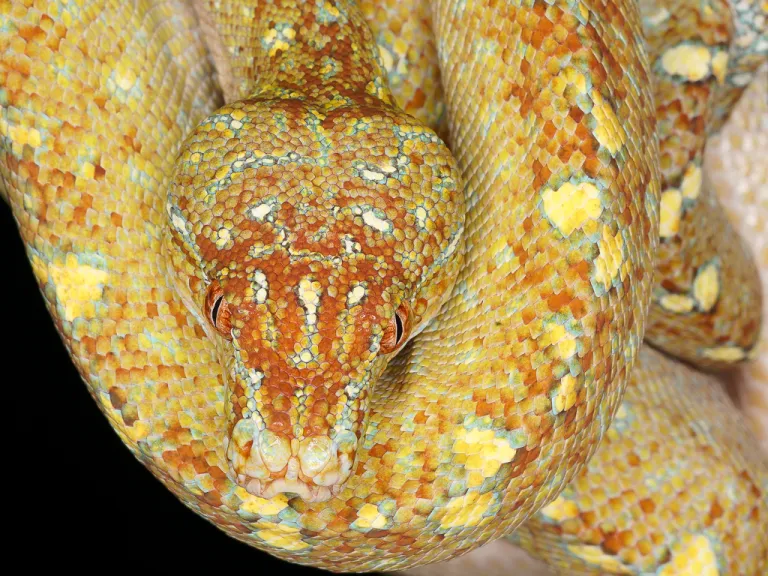
The Mosaic line is one of the most remarkable bloodlines in the world of Morelia viridis (green tree pythons). Founded by Pedro Caixinha in Portugal, it stands out for its exceptionally high level of melanism: some descendants retain more than 50% black coloration well into adulthood, while also expressing the red scales characteristic of the founding male. This line is now the subject of international collaborative work, with breeders in Portugal, the United States, Canada, Italy, the Czech Republic, and Germany.
History
Origins (2013-2015)
The story begins in 2013 in Austria, where Philipp Thun-Hoenstein produced Mosaic from a pairing between a Highland mite phase male named "Krypton" and a high-yellow mite phase female called "Black Rain". A group of babies from this clutch was sold to Ales Mlinar, a Slovenian breeder who kept Mosaic and some of his siblings for two and a half years. In 2015, deciding to keep only venomous snakes, Ales agreed to sell Mosaic to Pedro Caixinha.
Early Projects (2016-2017)
In 2016, Pedro bred Mosaic with a large F1 Lereh-type female named Hirubilo. This pairing produced 9 healthy maroon babies, including Halloween, Jackpot, Friday 13, Dark Shadows, and other remarkable specimens.
The following year, Pedro wanted to test whether Mosaic was dominant for red pigmentation. He paired him with Arubiak, a yellow neonate female from 2011 named "Saudade" — Pedro's first female Morelia viridis, whose mother was also his very first green tree python. This pairing produced 6 red/maroon babies, confirming Mosaic's dominance for this trait.
The Calico Line Alliance (2018)
In 2018, Pedro made what would become Mosaic's most iconic pairing: a breeding with "Honey", a well-known female from the Calico Line (SSBMPA I3-02, October X Wameniak). Honey displays the "Calico" phenotype and deposited beautiful fertile eggs, but only 3 viable babies hatched, with one dying shortly after. The two survivors turned out to be exceptional, combining the traits of both parents. Pedro named this clutch "Mosaicos" — a fusion of the Mosaic and Calico bloodlines.
Recent Developments (2019 and Beyond)
In 2019, Pedro repeated the Mosaic x Hirubilo pairing, obtaining 25 fertile eggs of which 21 hatched. That same year, a second successful pairing with "Lil'Box" (MNI1-01), a yellow Aru female, produced the first Morelia viridis ever born in Portugal. This clutch of 8 healthy maroon babies once again proved that Mosaic only produces red or maroon offspring, even when paired with a yellow neonate female. These youngsters are currently beginning their ontogenetic color change, with some already showing black scales before reaching one year of age.
Pedro is currently pursuing two exciting projects with Mosaic: a repeat breeding with Honey to produce more "Mosaicos", and a new pairing with Eleanor (BEI3-07, Dash-O-Pepper x Merlot). Eleanor, owned by Joni Fernandes and on breeding loan, is a genetic powerhouse incorporating Pepper Line, Lemon Tree Line, TW Blue Line, and other amazing lineages. The goal: to produce extraordinary black animals.
The Legacy of a Legend (2023)
In 2023, Mosaic passed away, leaving behind an invaluable legacy in the world of Morelia viridis. This exceptional male left an indelible mark on the history of captive breeding through his unique genetics and the extraordinary lines he produced. Thanks to the passionate work of Pedro Caixinha and breeders worldwide who continue his bloodline, Mosaic lives on through his descendants. His influence on the green tree python community will remain for generations to come.
Genetics
The Distinctive Trait: Melanism
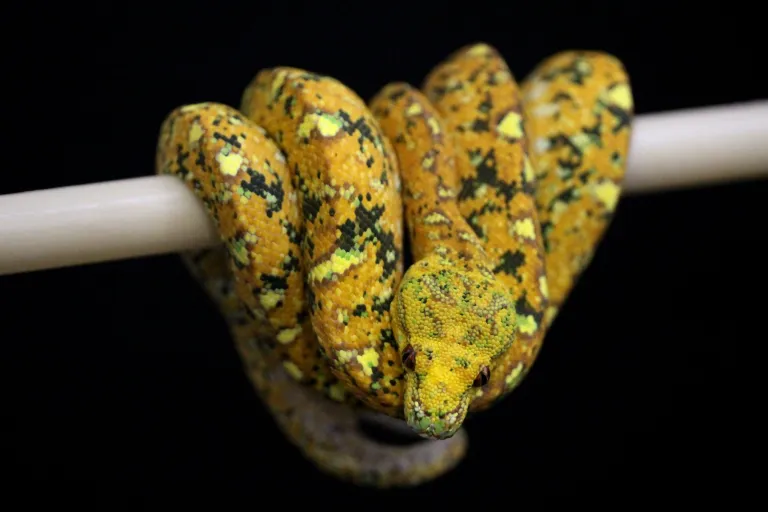
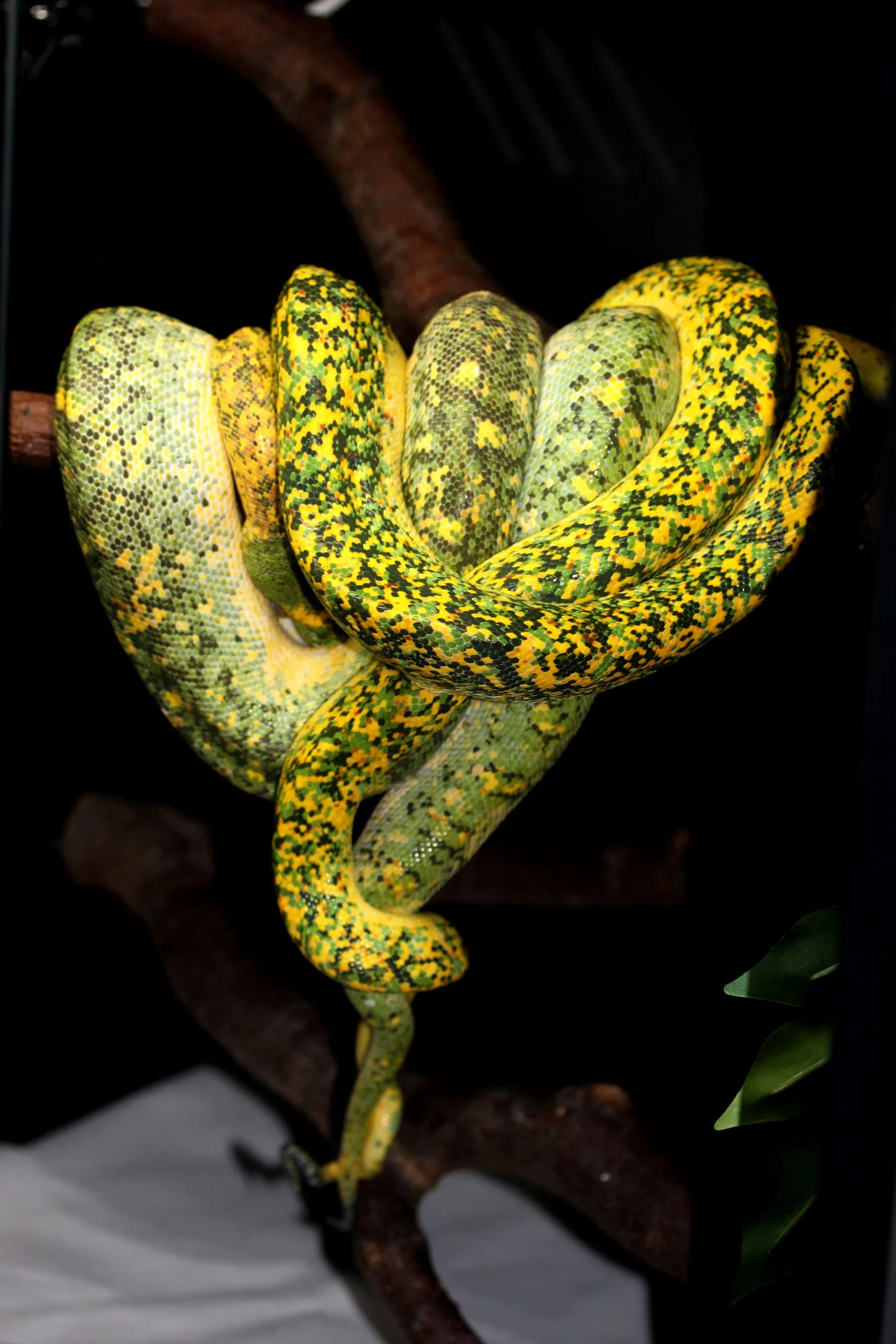
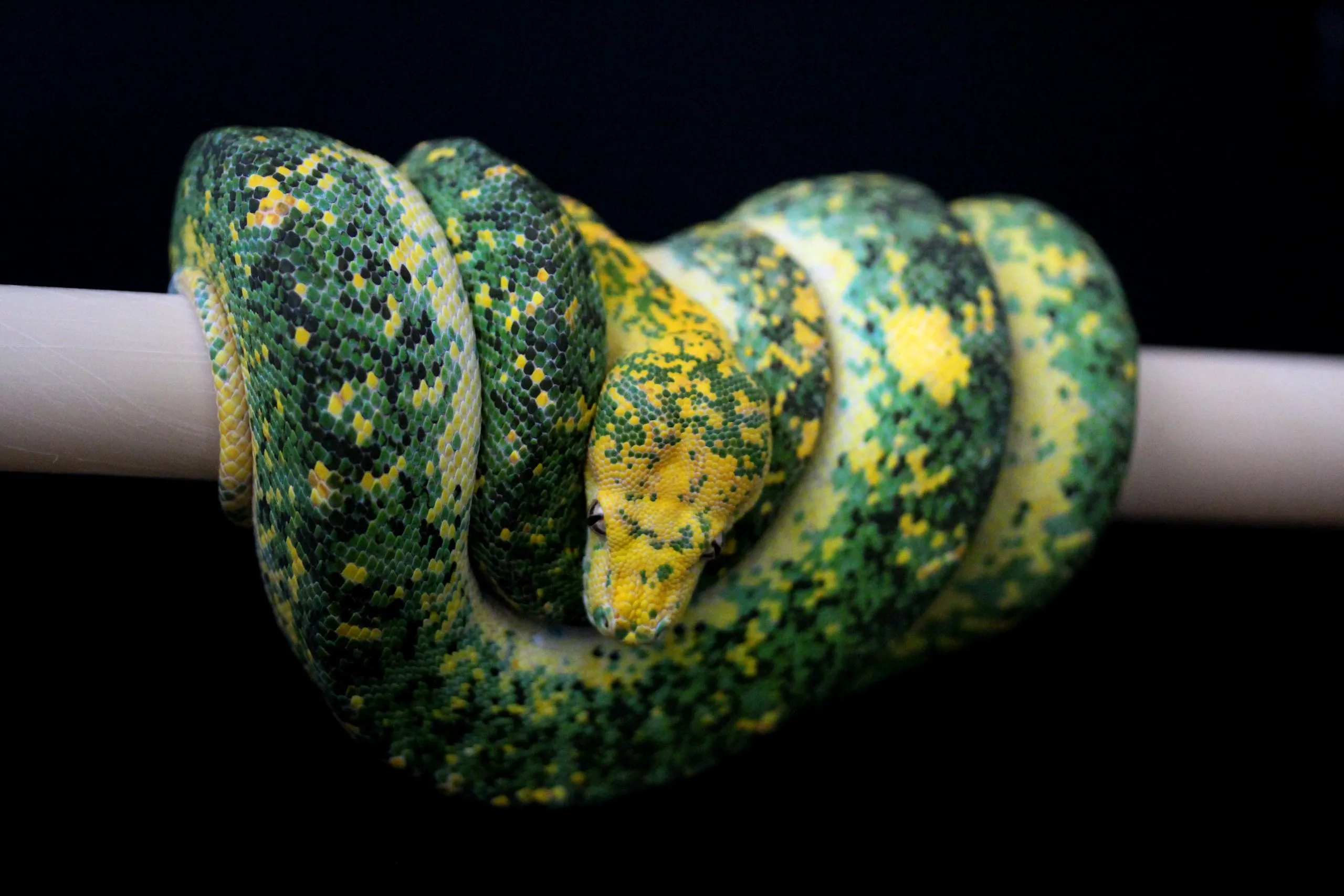
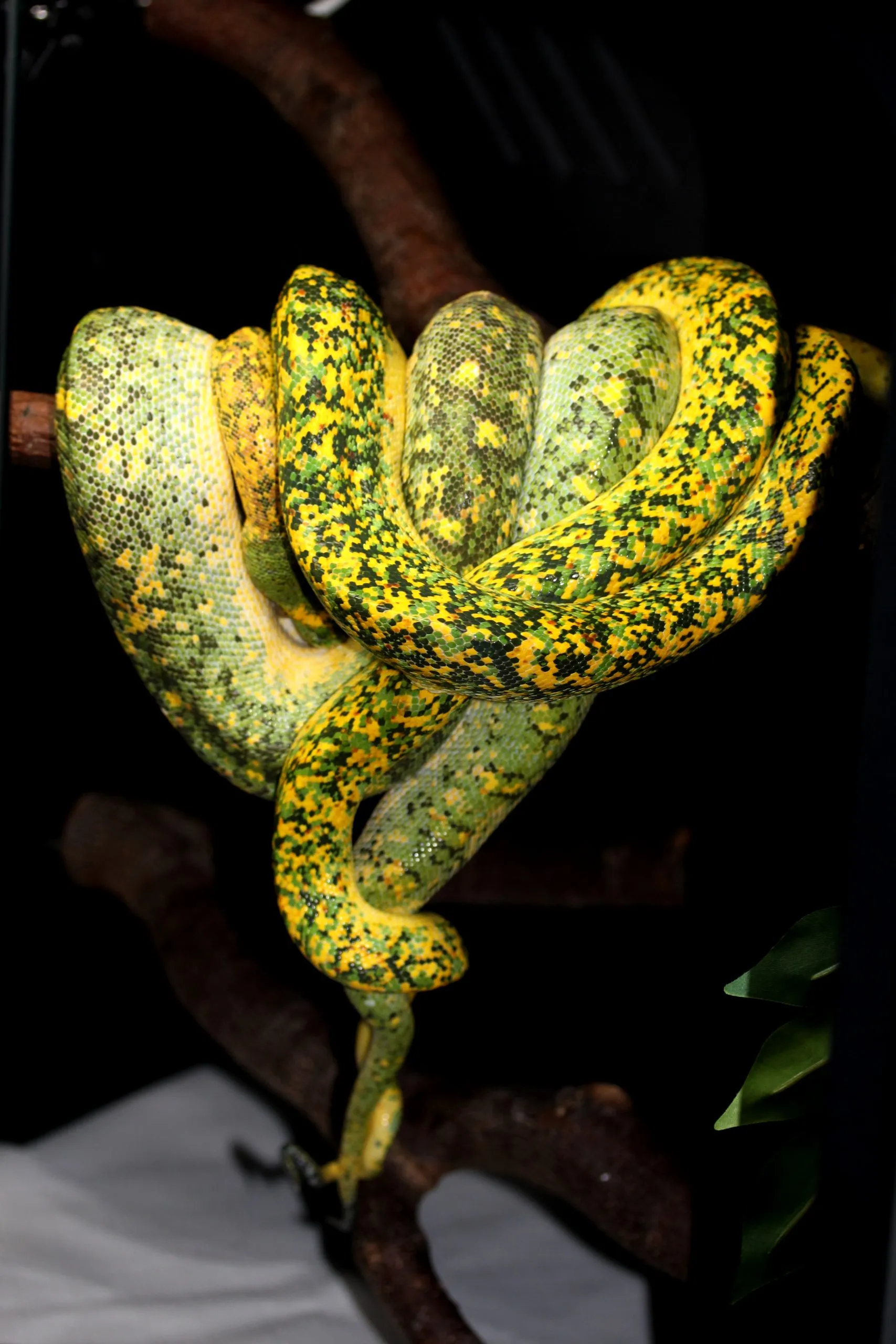
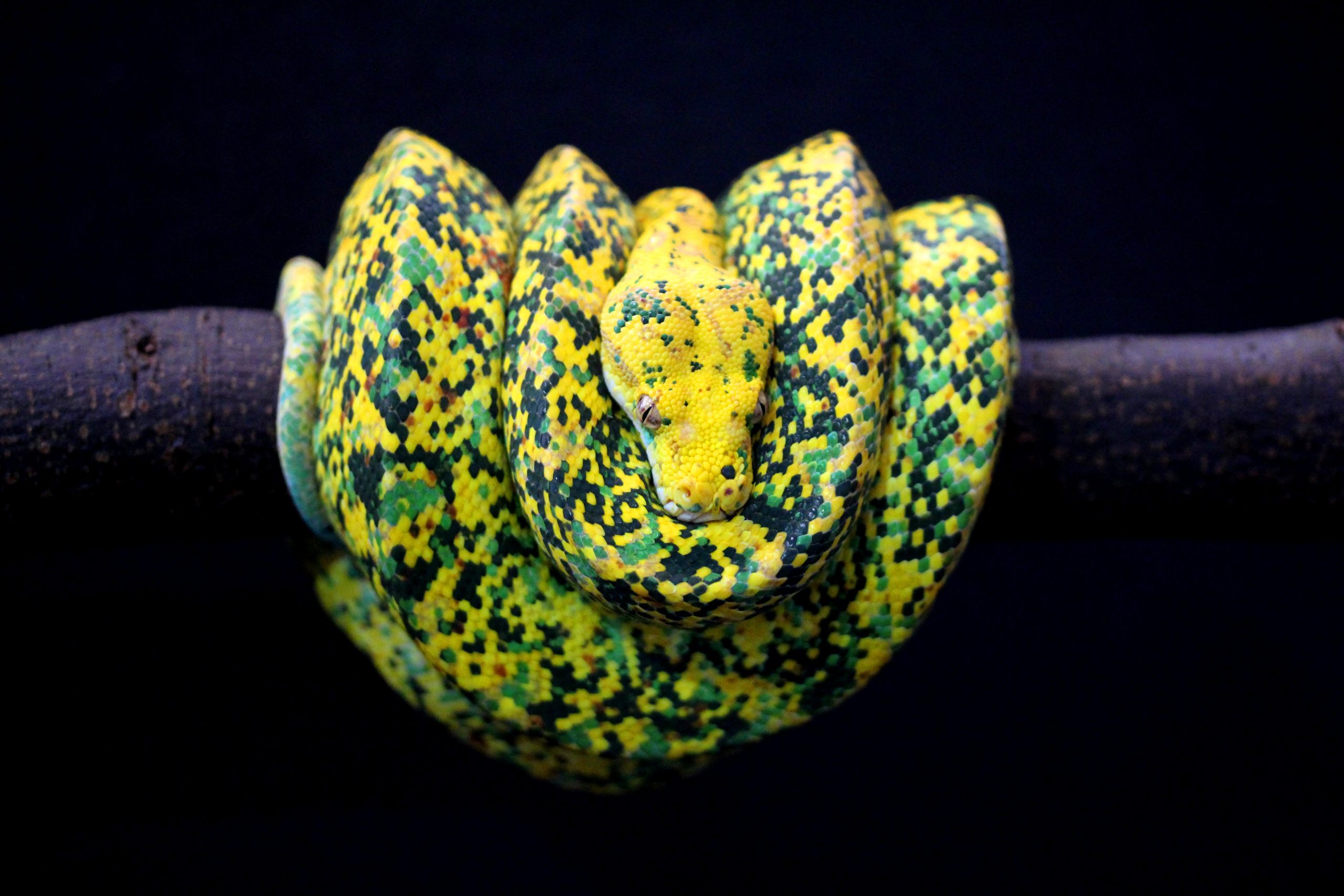
The most notable characteristic of the Mosaic line is its high level of melanism. In descendants, black scales are typically the first to develop during ontogenetic color change — even before the green scales. From there, the color transformation progresses scale by scale in a unique pixelated pattern.
Red Pigment Inheritance
Breeding trials have demonstrated that Mosaic dominantly passes on his ability to produce red scales, which remain visible even in adults, just like the founding male.
Notable Descendants
The line now includes many remarkable offspring:
- Halloween, Jackpot, Friday 13, Dark Shadows (from Mosaic x Hirubilo)
- Witchcraft, Iconic (from Mosaic x Saudade)
- Iron Tusk, Blood and Thunder (from Mosaic x Honey)
Gallery
6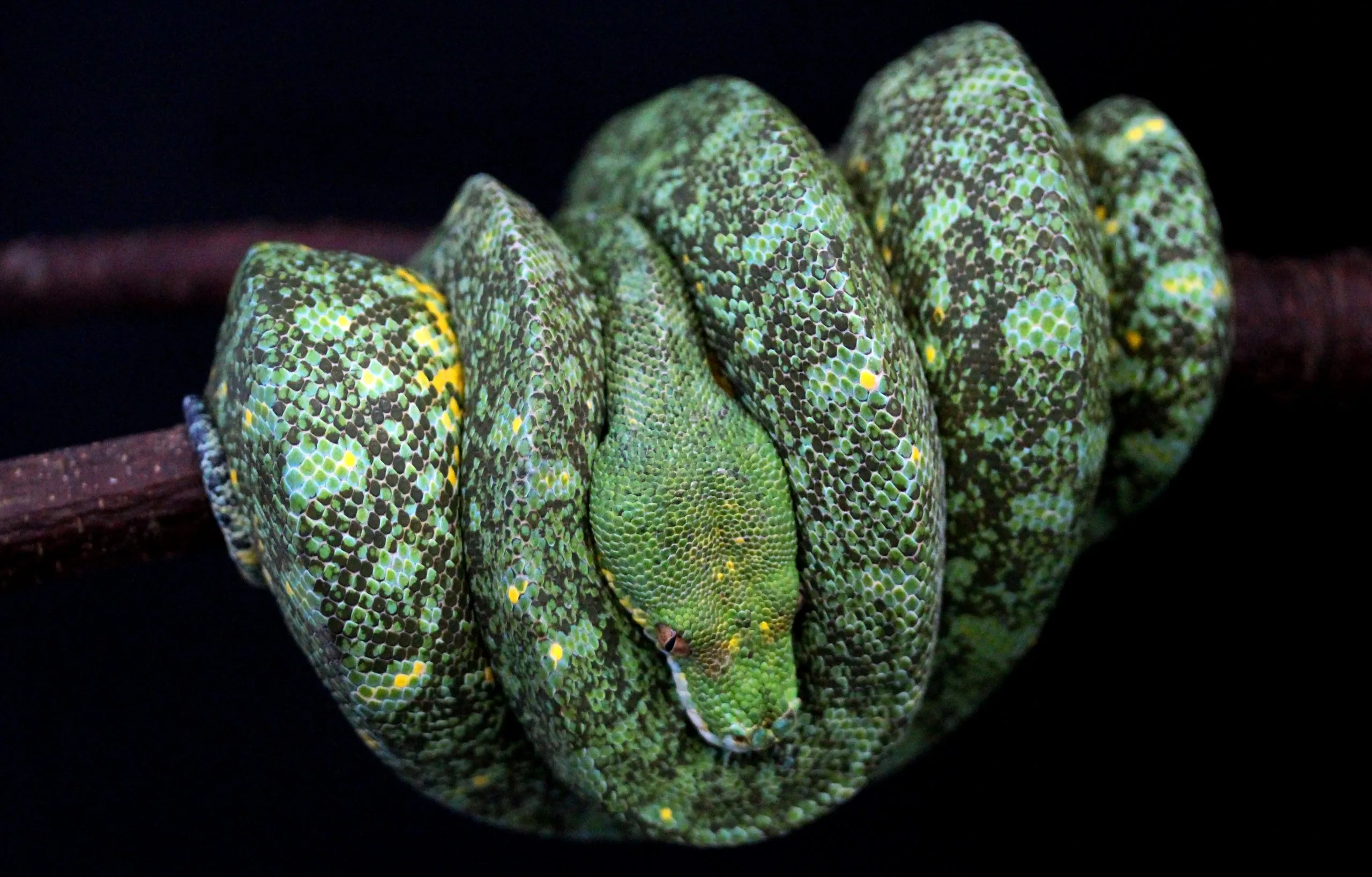
Other Designer Lines
4

Published on December 22, 2025