First, let me clarify that I am by no means an expert on Green Tree Pythons (Morelia viridis). I am relatively new to keeping this species. When I started learning about them in 2021, I was overwhelmed by the amount of information available, the time it took to gather it all, and even then, I didn’t feel like I had a solid starting point due to the wide range of opinions and methods.
This page aims to provide a safe starting point for beginners and enthusiasts discovering the species. It is a compendium of accumulated knowledge from those who came before me, gathered from various platforms in one place. It includes basic care information passed down by breeders and keepers with decades of experience and success with the species, as well as helpful links to the best sources of knowledge and equipment for GTPs, to help answer your questions and set up your enclosure.
This guide promotes simple, clean setups that follow best practices.
(Not everything in this guide is universally agreed upon, but the parameters described are generally considered a “safe zone.”)
Animals are housed based on weight, not just age, as growth can vary individually depending on feeding.
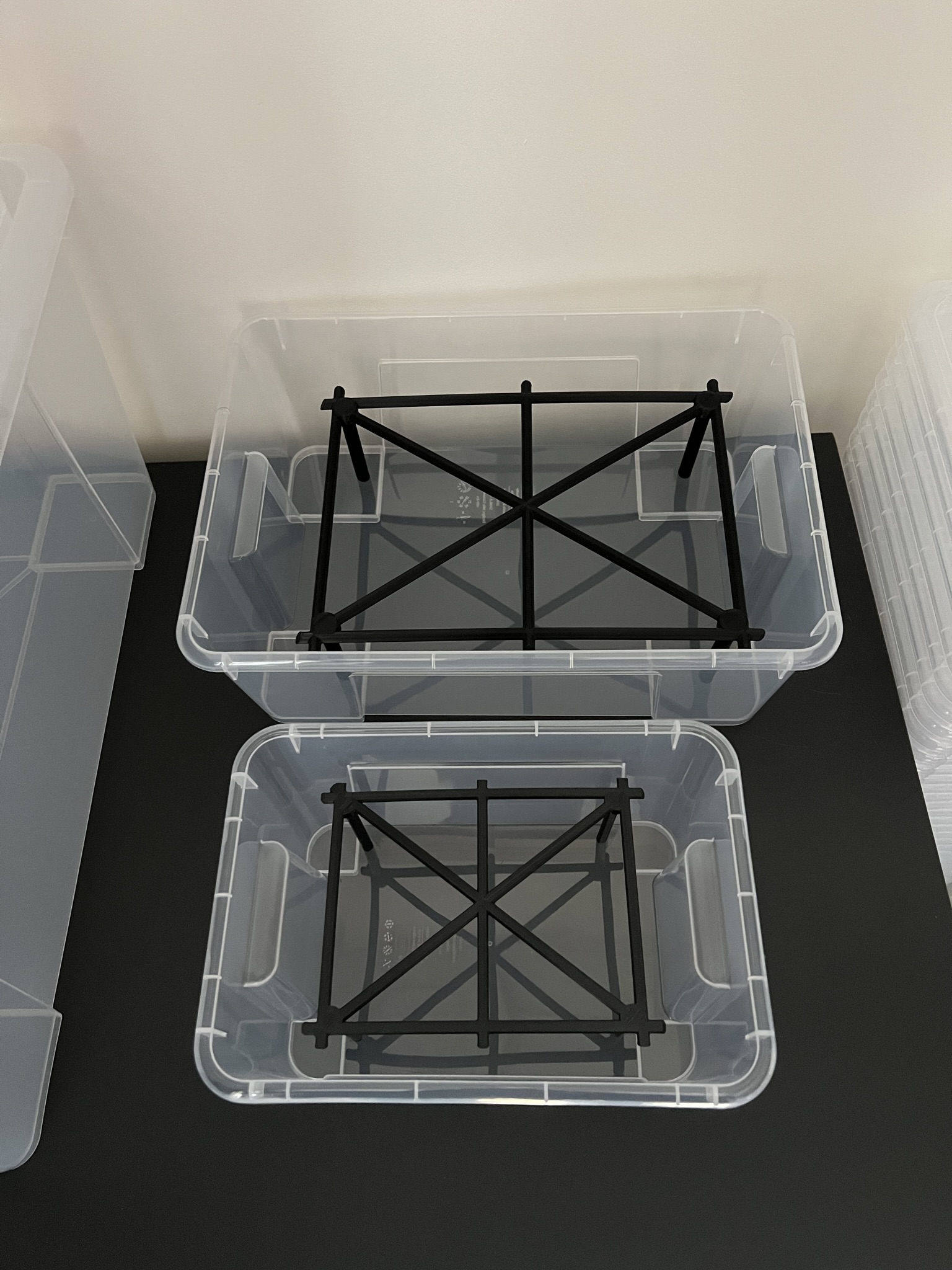
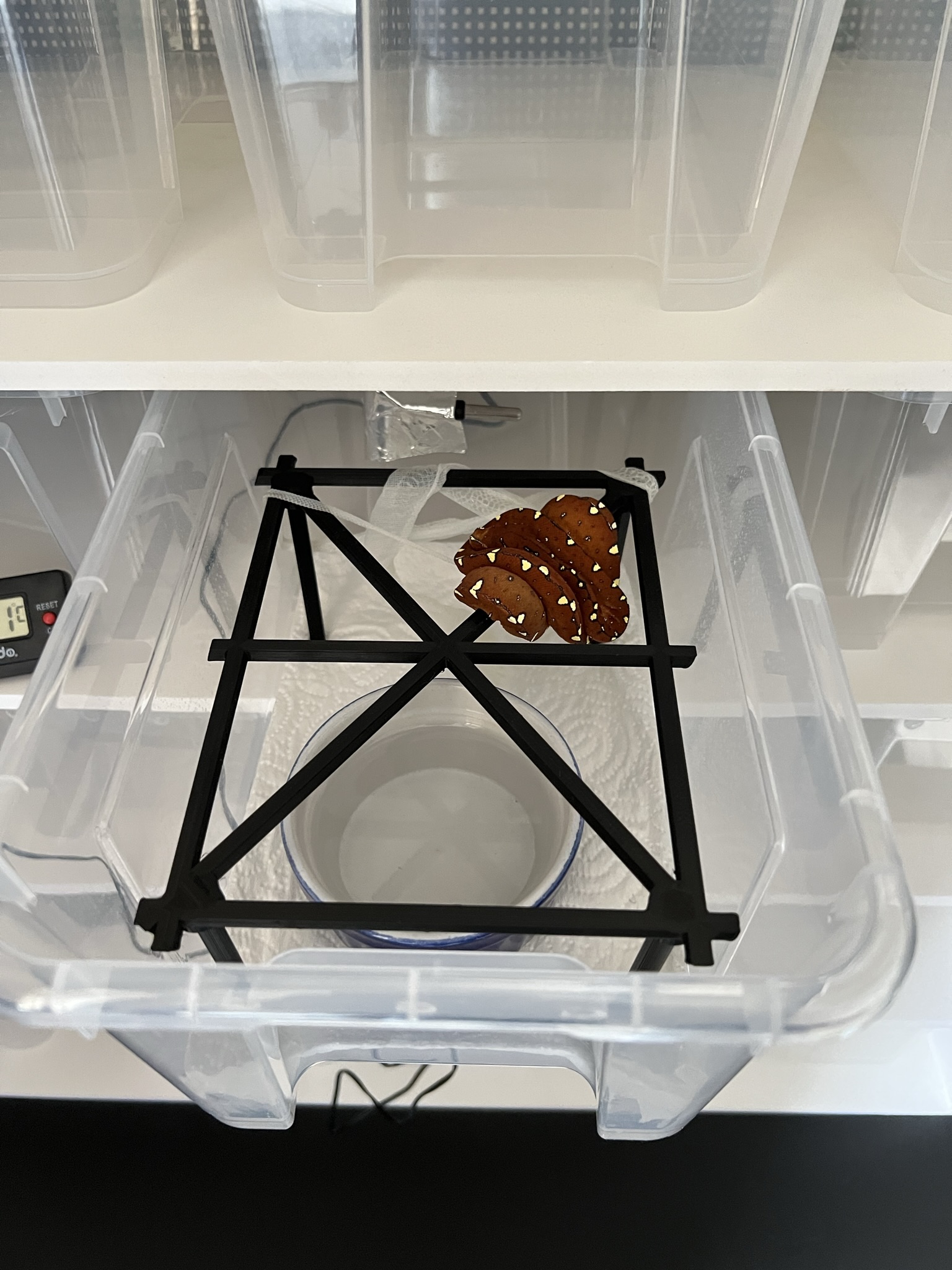
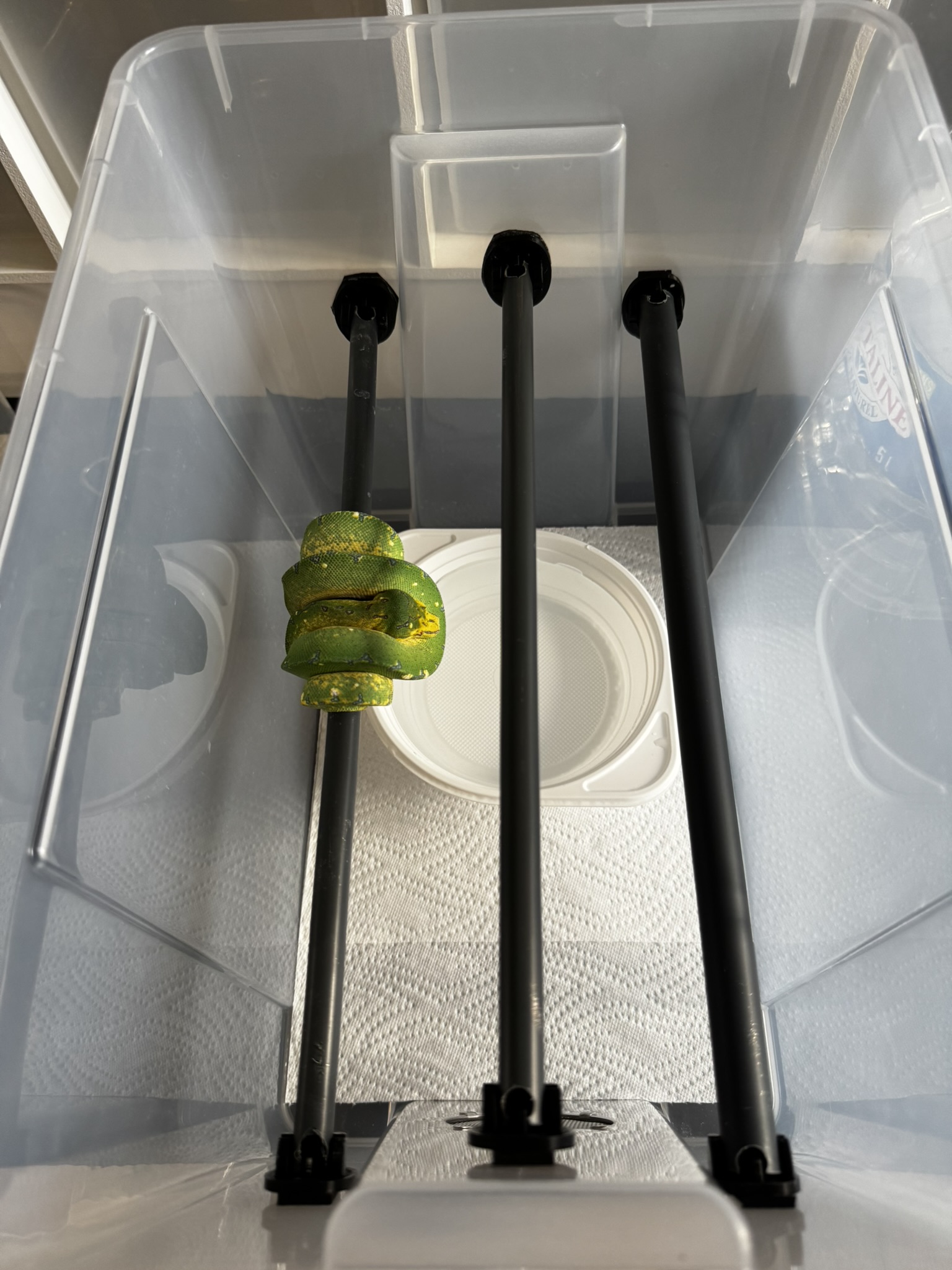
- Babies (0–100 g): small boxes (e.g., 19x19 cm trays or 5 L Samla) to reduce stress and make feeding easier. Too much space increases anxiety.
- Juveniles (100–350 g): larger boxes (e.g., 40x30x30 cm Samla) in racks. They can move freely while staying secure.
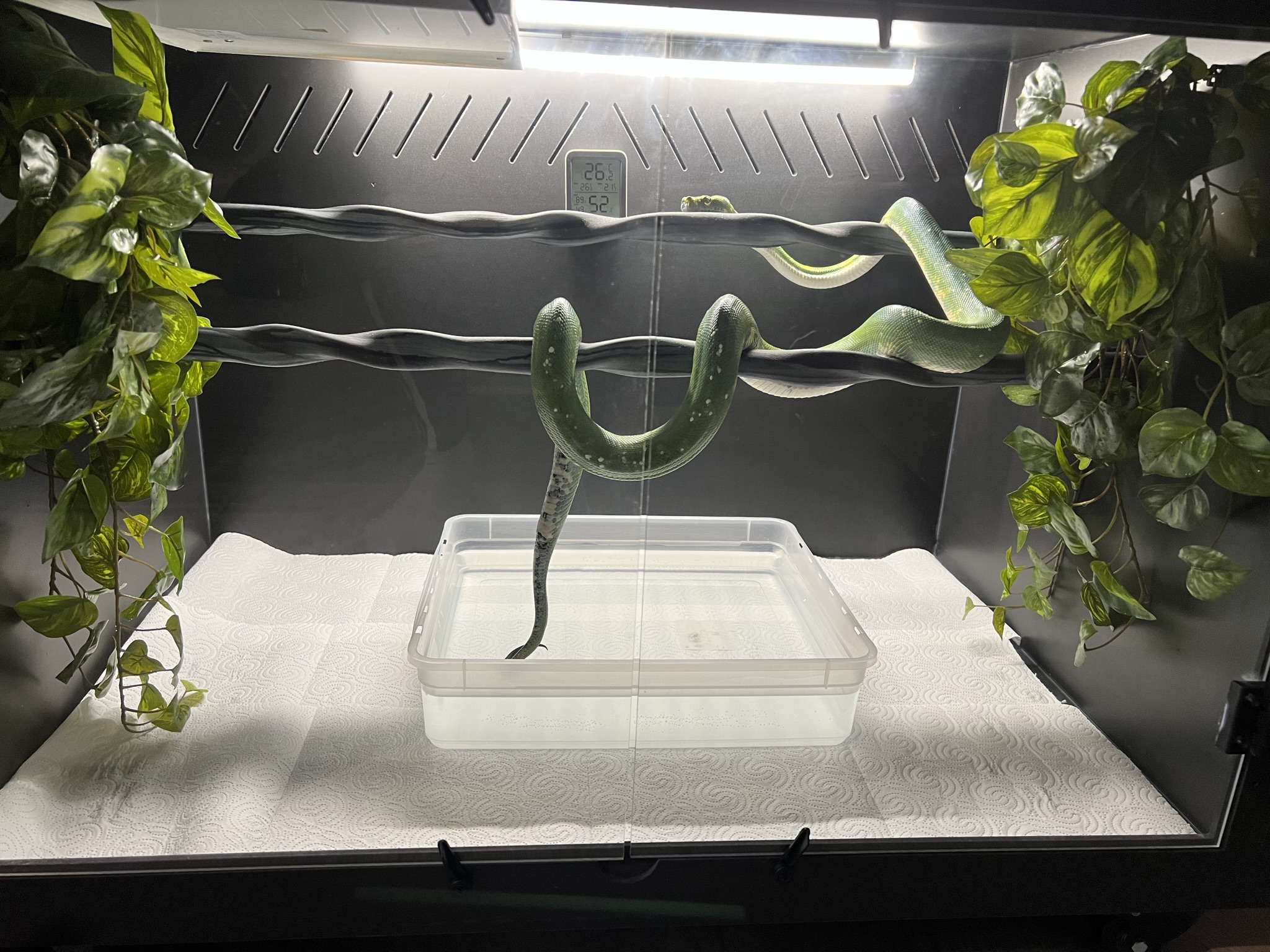
- Subadults / Adults (>350 g): final or transitional terrariums. Males: 60x60x60 cm. Females: 90x60x60 cm (around 3–4 years old).
- Substrate: We don’t use any substrate, only paper towels. Puppy pads or newspaper can also be suitable. This makes cleaning easier and helps maintain a sterile environment.
Ideal room: A quiet room with little traffic, kept at a minimum of 20–22 °C and not exceeding 28–29 °C in summer.
We do not use bioactive setups, as they are too complex and risky for animal health, especially for beginners.
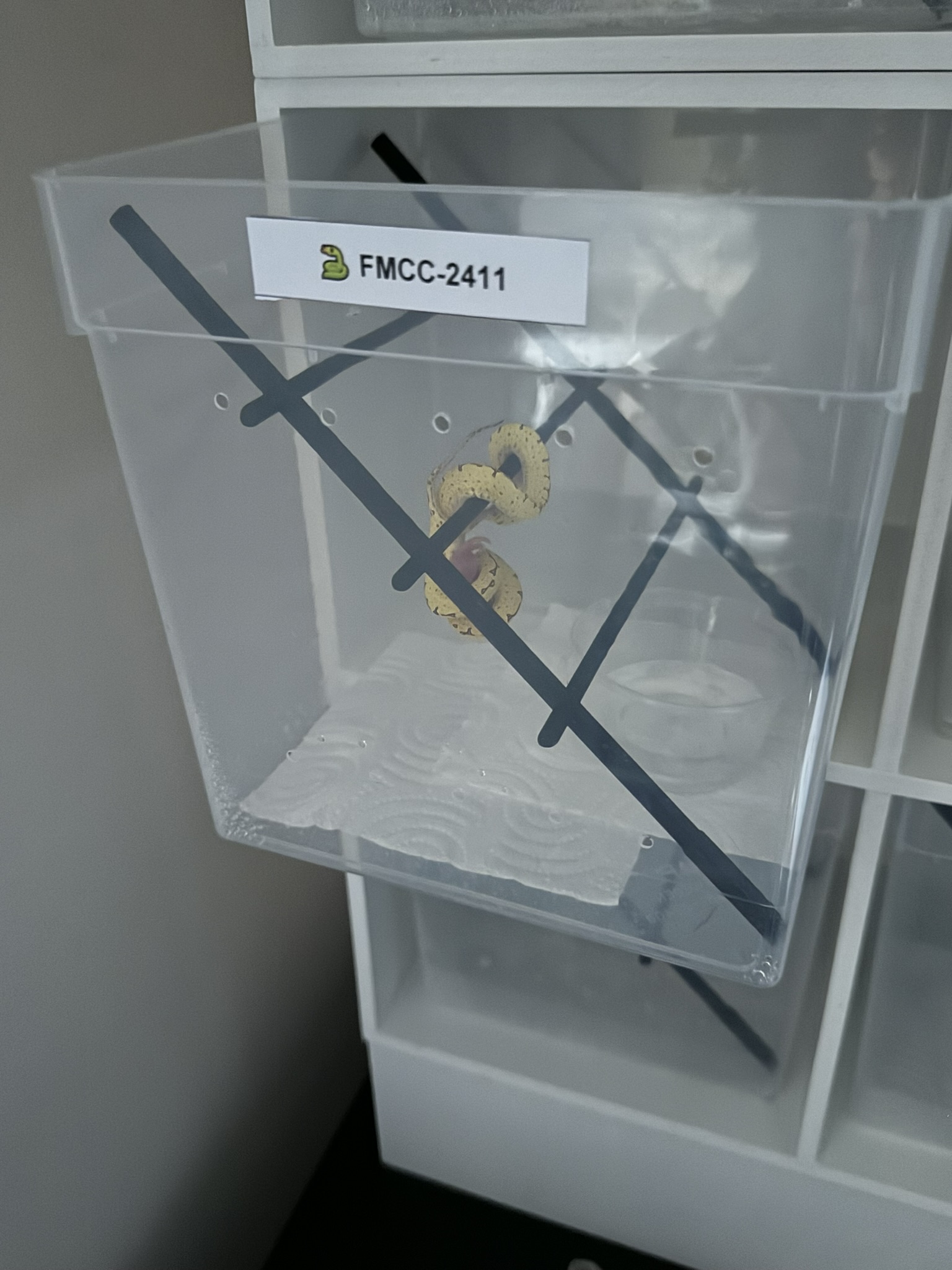
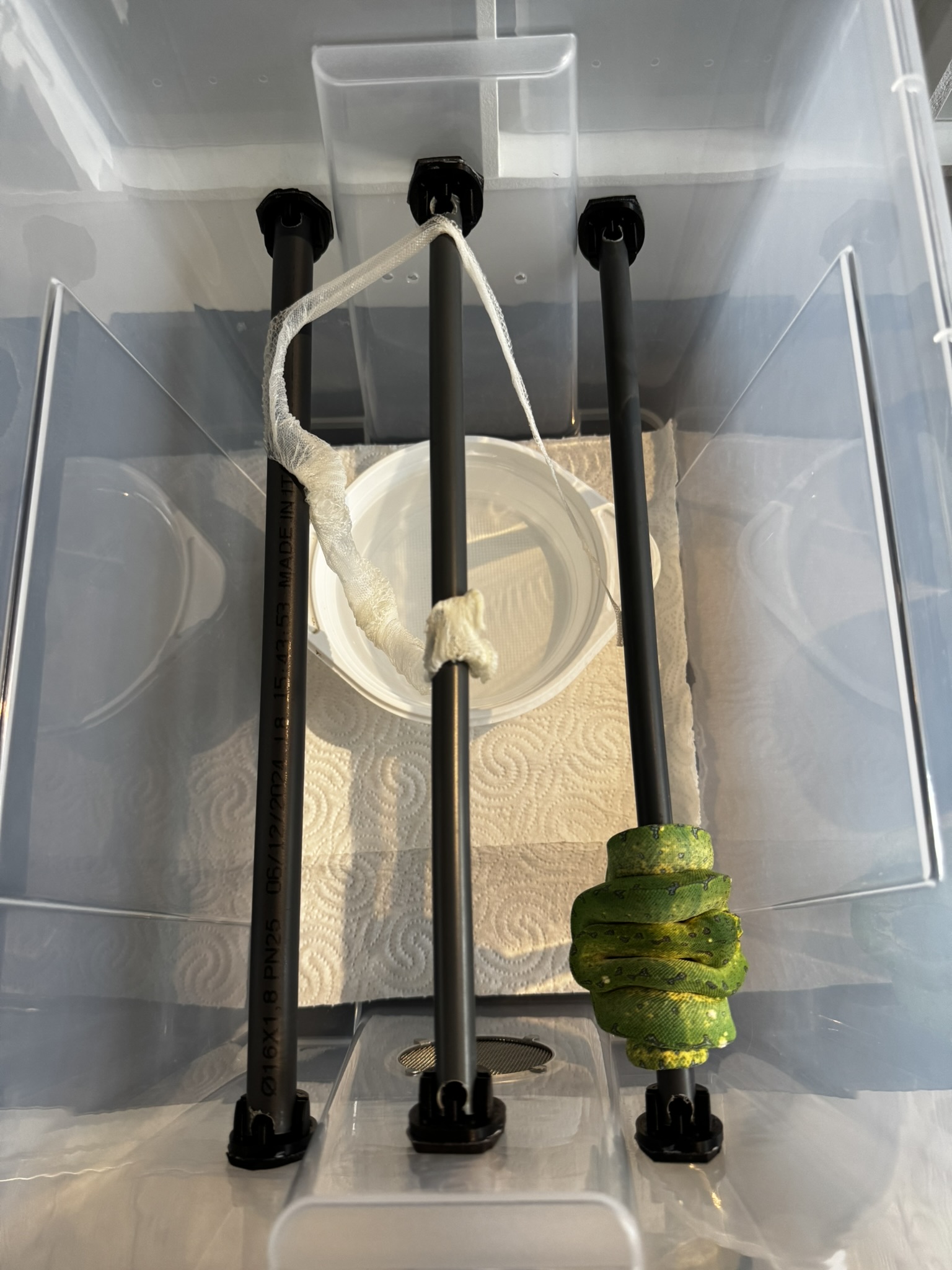
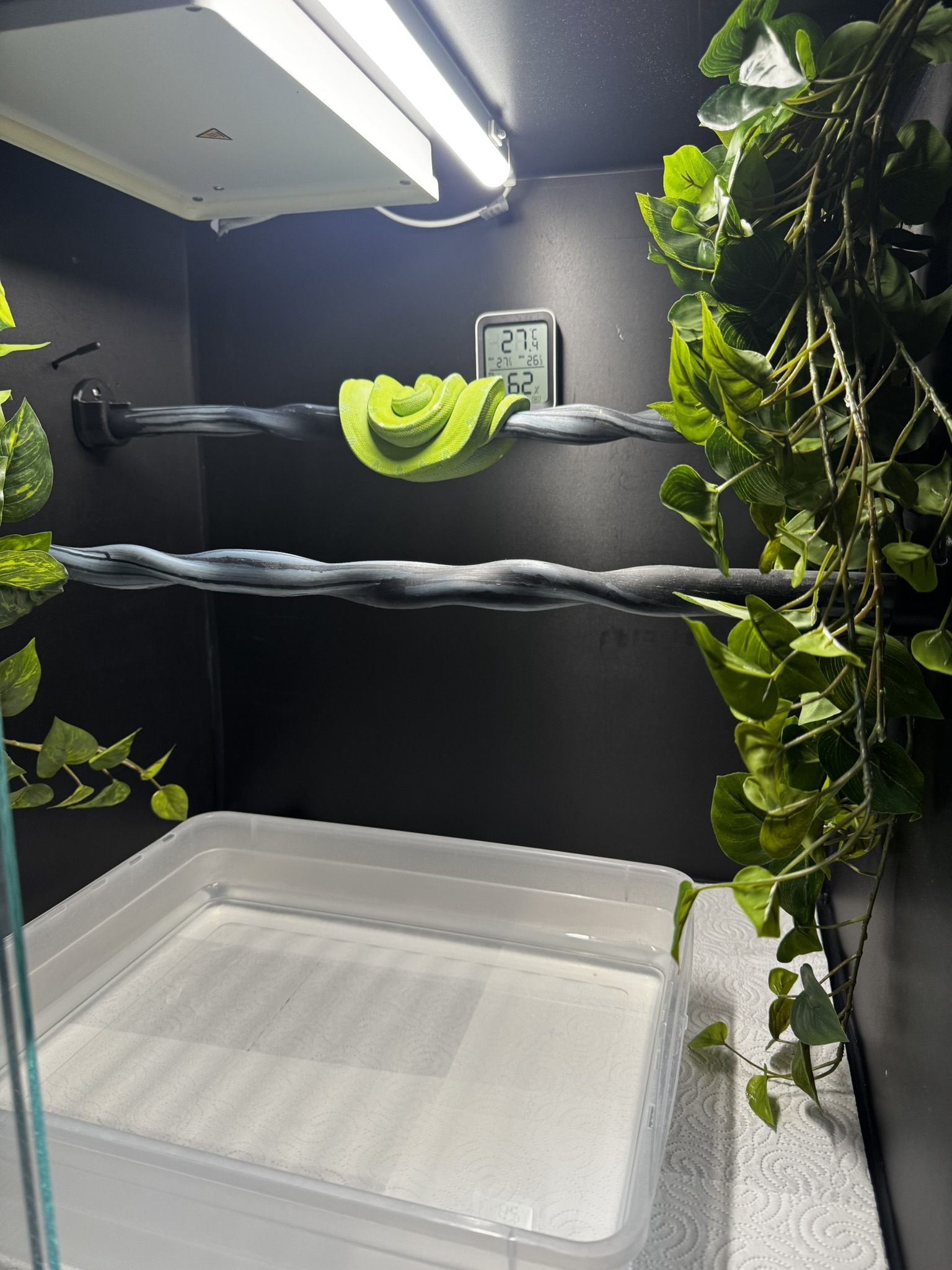
Maintain a localized hot spot (~28°C) with a thermal gradient allowing the animal to choose its preferred temperature.
-
Babies: no nighttime needed (can be done).
-
Sub-adults / adults: 2°C drop at night to mimic natural cycle.
Applicable for both racks and terrariums.
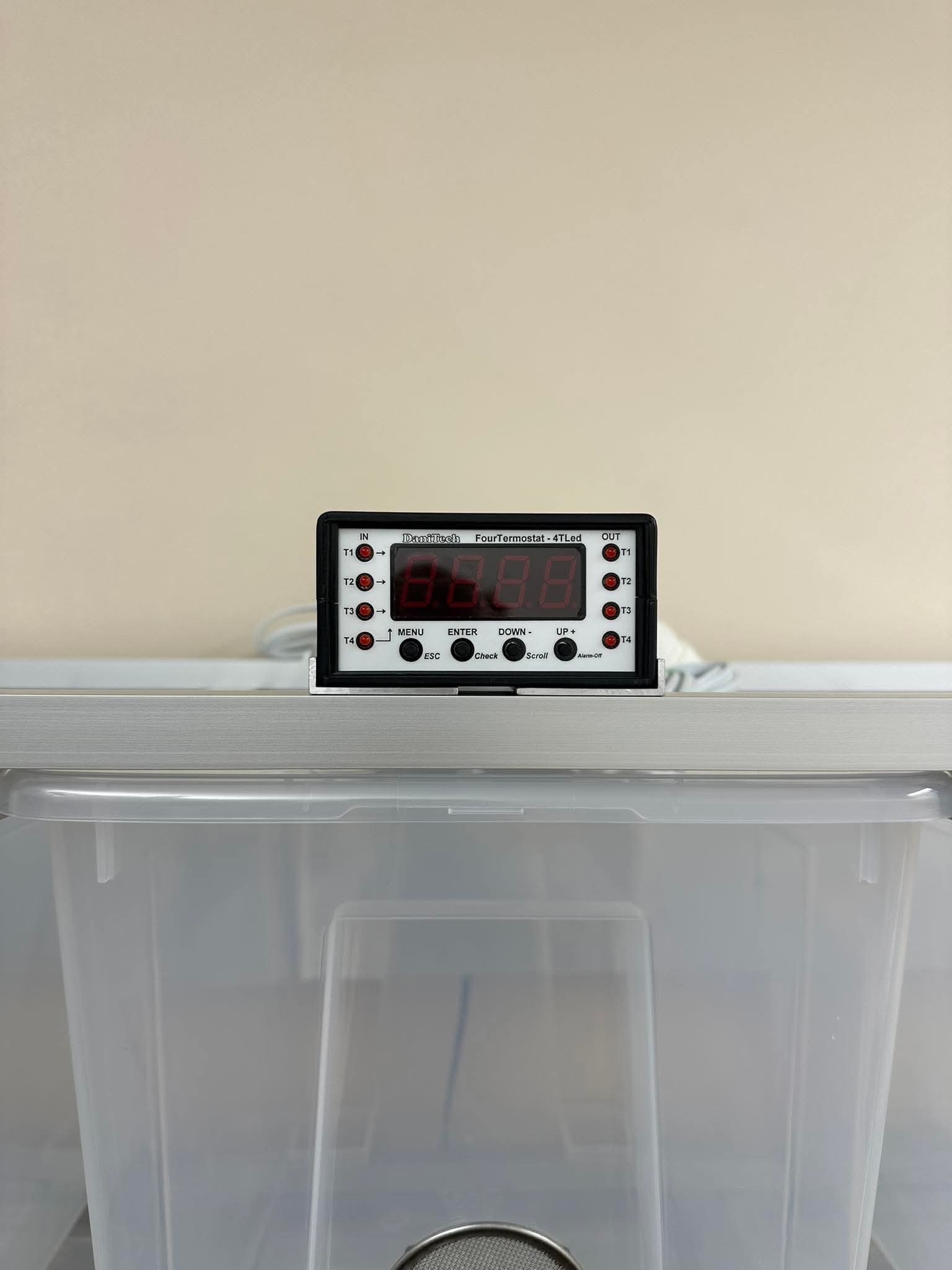
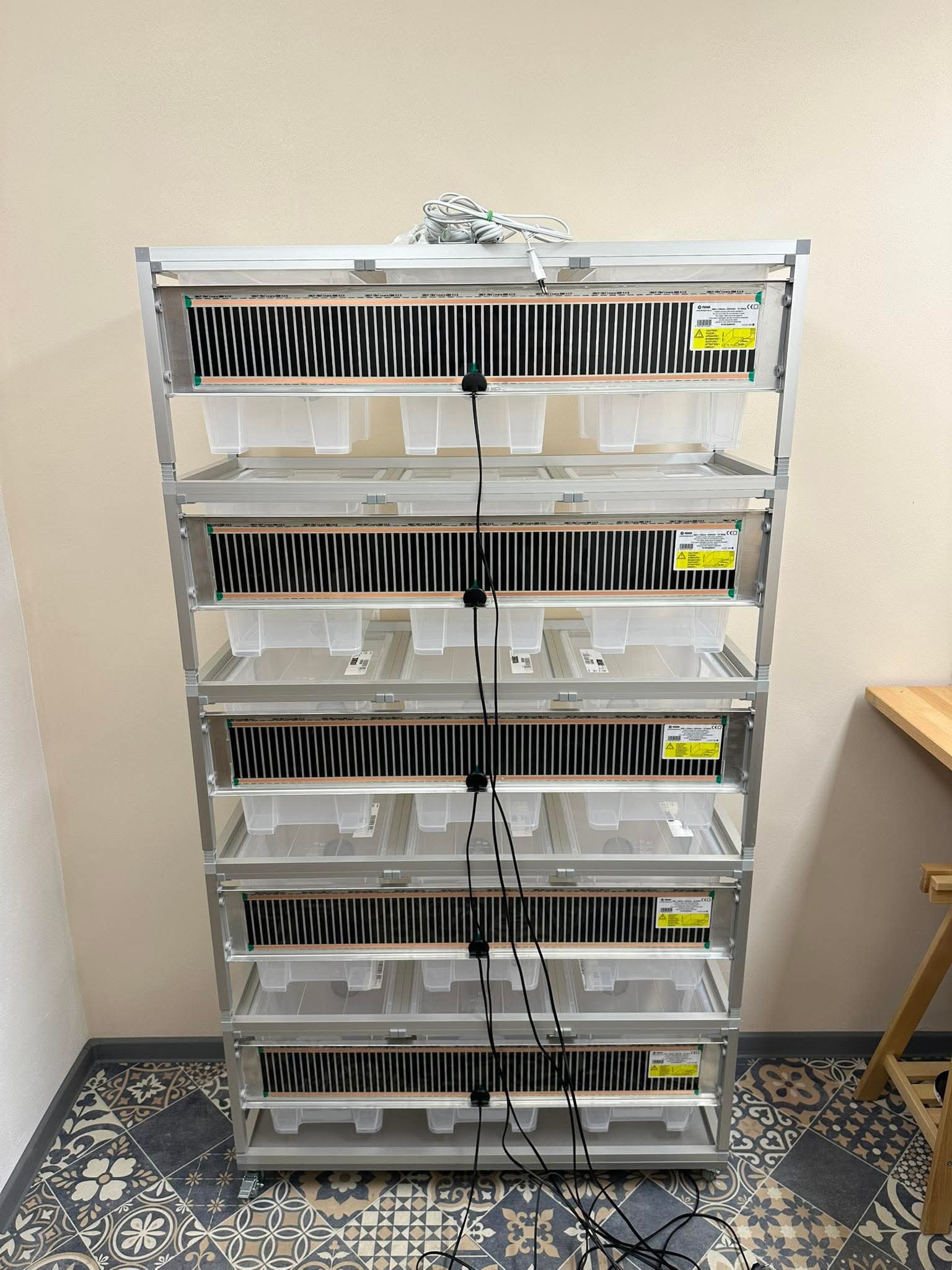
- Thermostats used: Habistat, Microclimate, Danitec (4 probes per rack for even temperature). We recommend dimming or pulse thermostats and advise against ON/OFF thermostats, as dimming/pulse models provide more stable temperature control.
- Racks: the probe is placed in the center of each level.
- Terrariums: the probe is positioned on the highest perch, 10–15 cm from the heating panel.
- Heating panel: cover no more than 1/3 of the surface to create a localized hot spot.
The brands mentioned are for reference only. Many other brands exist, some available in Europe but not in the US, and vice versa.
This topic is often controversial. Some keepers prefer to mist their animals daily, while others are against it. We believe both methods can work well, and it mostly comes down to personal preference.
In our breeding setup, we prefer not to mist adult and juvenile animals, as we have found the right humidity/hydration balance to ensure perfect shedding.
-
Adults and juveniles: no need to mist if the room’s environment is balanced.
-
Babies (0–100 g) in the baby rack: we mist generously once a day to ensure perfect shedding. Babies are more fragile, so it’s essential to provide extra humidity and encourage them to drink the droplets.
-
Water change: Daily for babies, as they tend to defecate very often. For older animals, the water is changed every 2–3 days.
If your setup is not yet optimized, it is advisable to mist adults during shedding, making sure to allow the terrarium to dry for about 24 hours before misting again.
It is essential that all perches are removable, making cleaning easier without handling the animal, which greatly reduces stress. This also allows you to take photos or check the snake’s health without disturbing it.
-
Baby rack: we use very thin 3D-printed perches. A small diameter is crucial to prevent cigar back, a spinal deformation that can occur if perches are too thick for young snakes.
-
Large rack: perches between 12 and 16 mm in diameter. We provide multiple sizes in each box so that the animal can choose the one it prefers, encouraging movement and comfort.
-
Terrariums: perches 20–24 mm in diameter, suitable for adult snakes.
General rule: never place perches thicker than the animal’s thickest part, to prevent injuries or deformities.
Feeding depends mainly on weight, not just age. Young animals eat more frequently:
-
Babies (0–100 g): pinkies (newborn mice), every 5–7 days. The goal is to quickly move to the next prey size once the baby gains weight, as pinkies have low nutritional value.
-
Small mice / fuzzies: weekly.
-
Jumper mice: every 7–10 days.
-
Small adult mice: every 10 days.
-
Adult mice: every 14 days, although some adult males may eat only every 21–30 days.
-
Rats (50–90 g): once a month for adult females.
Notes:
-
Feed according to weight, not “neonate”, “juvenile”, or “sub-adult” categories. Monitoring individual growth is essential.
-
Sexually mature males may stop eating for several months during the breeding period. This is completely normal; some continue eating, others stop and resume once the reproductive cycle is over.
The Morelia viridis is not a species to be handled frequently.
-
Handling should be limited to health checks, after shedding, or for keeper enjoyment once in a while.
-
Babies and young animals: minimal handling. Mistakes can cause stress, falls, or injuries.
-
Adults and subadults: handling is possible with care, respecting the animal’s behavior.
-
Key rule: never handle immediately after feeding; wait at least 2 days.