Designer Line The Albino Line
Introduction
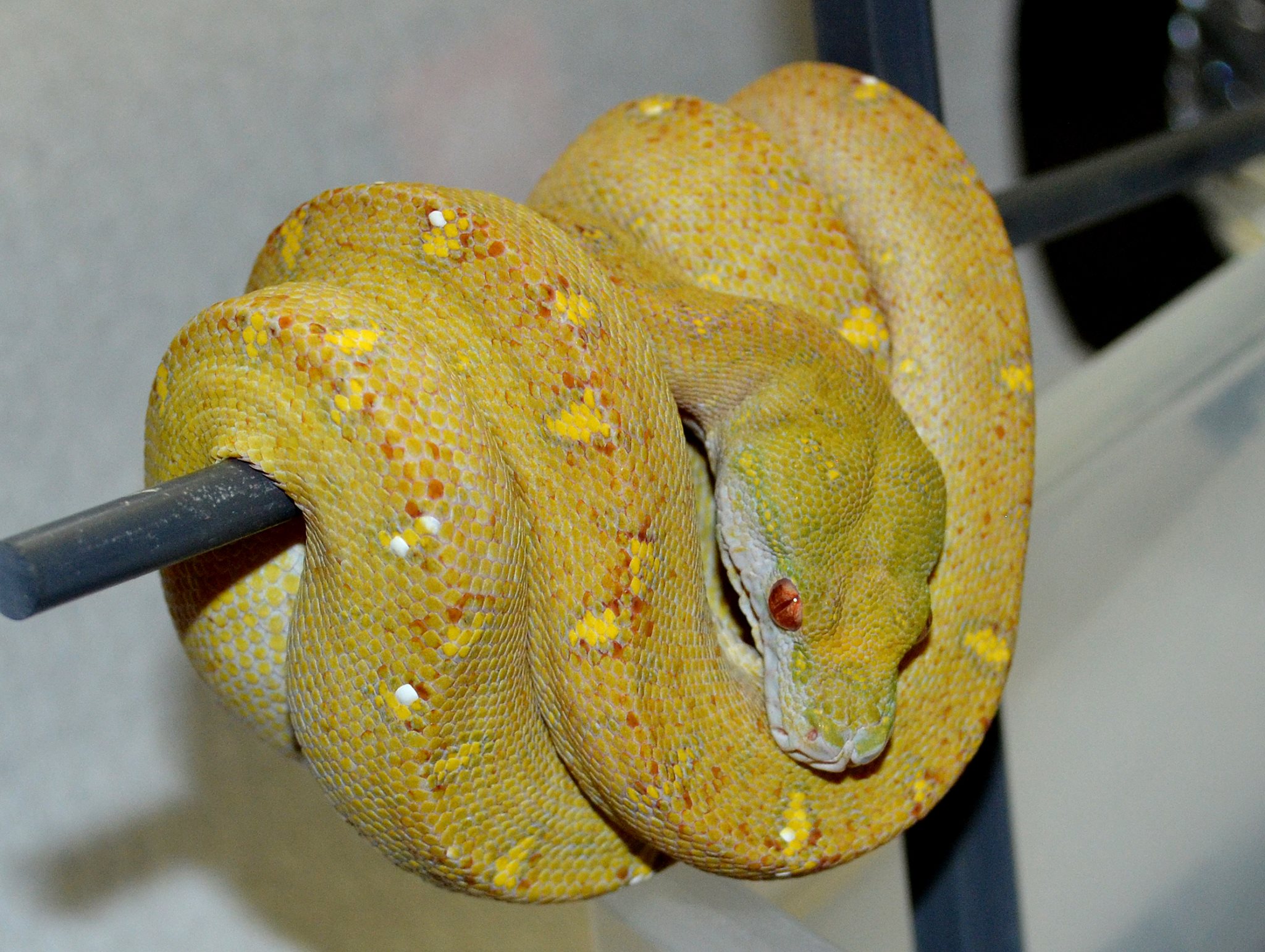
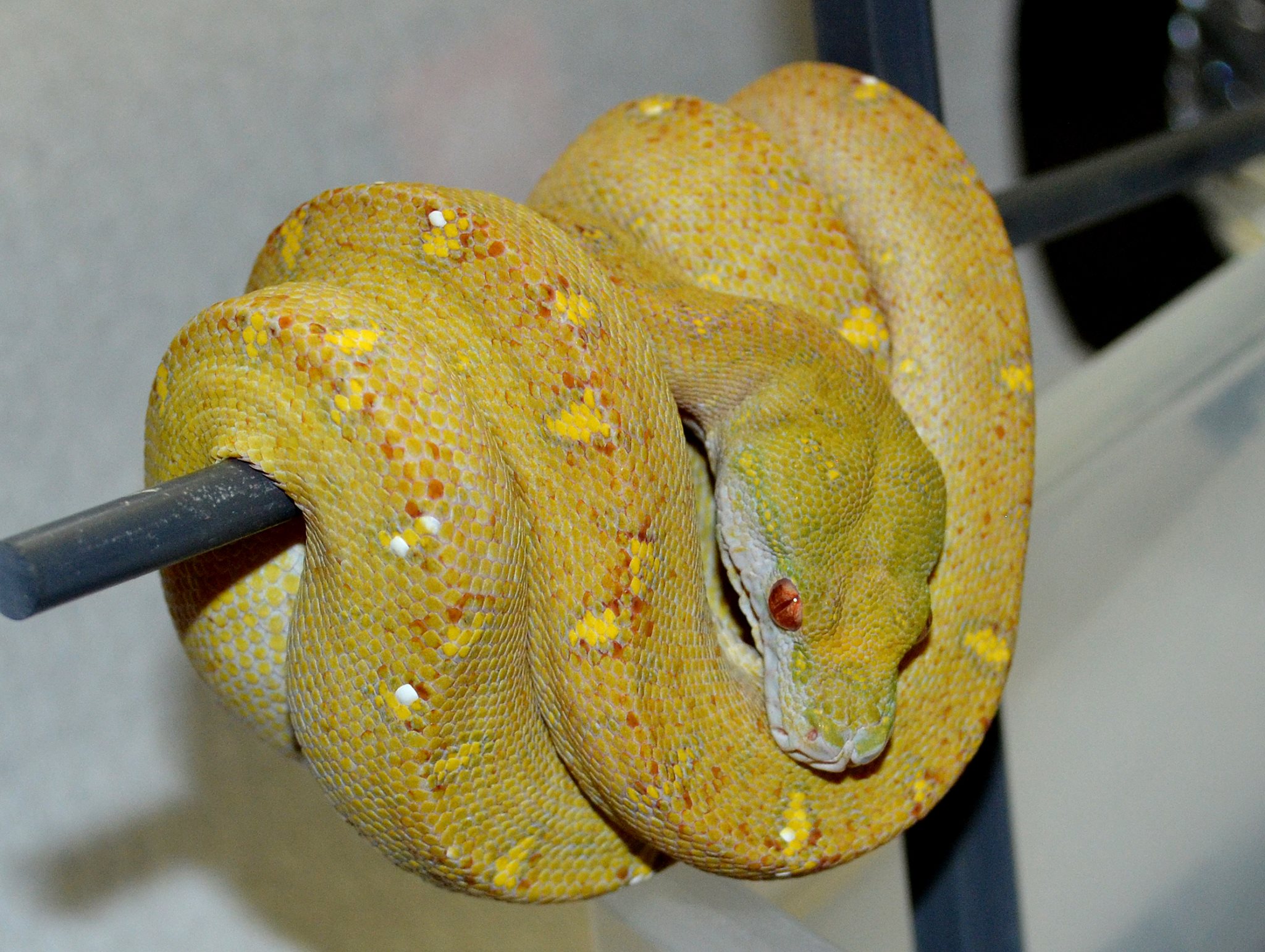
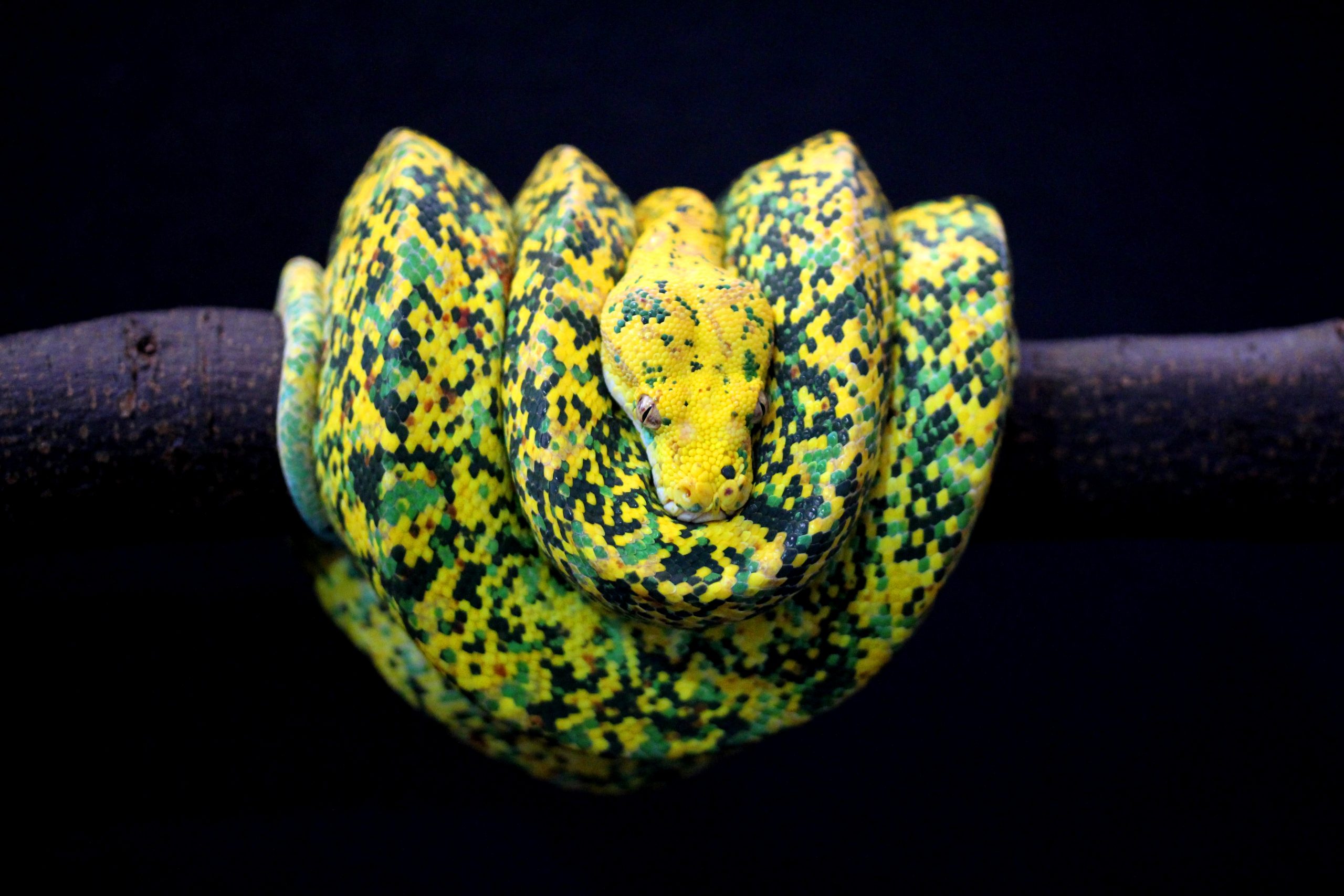
The Albino Line represents one of the most ambitious and challenging projects in the world of Morelia viridis. Founded by Damon Salceies, Trooper Walsh, and Marcial Mendez, this line pursues the dream of producing viable and breeding albino green tree pythons. Characterized by their red pupils, pink unpigmented tongue, and complete lack of black in their pattern, albino chondros transform into striking golden yellow adults with touches of white, orange, and red. To date, fewer than ten individuals are known to have completed their ontogenetic color change, making this one of the rarest and most valuable lines in the hobby. The true potential of the albino gene will not be fully realized until animals crossed with various designer bloodlines survive to maturity.
History
Origins: The VPI Meraukes (Late 1990s)
The Albino Line story begins in the late 1990s, when Dave and Tracy Barker of VPI acquired a group of imported Merauke locality Morelia viridis from Bushmaster Reptiles. VPI bred these animals and produced at least one clutch. Both Damon Salceies and Trooper Walsh acquired offspring from this breeding: Damon received a reverse-trio (two males and one female), while Trooper acquired a single male.
Floyd: The First Albino (2001-2002)
Damon raised his trio and bred them during the 2001/2002 breeding season. It was from this breeding that the first known albino, "Floyd," a male, was produced. While Floyd did live to maturity, for reasons that remain unknown, Damon's line of albinos stopped with him. Few, if any, known descendants from this line remain in the hobby today. Floyd's fate remains unknown.
Midas: The Second Albino
Several years later, Trooper bred his VPI Merauke male to one of its offspring, producing the second known albino, "Midas," also a male. Although Midas lived to adulthood (7-8 years), he did not produce any offspring.
However, Midas' father (the VPI Merauke male) produced several clutches. Since he was a het albino, all offspring from these clutches are possible het for the albino gene. From one of these clutches in 2001 came "Versace."
Versace and Marcial Mendez's Project (2001-2013)
Marcial Mendez acquired Versace from Trooper prior to Damon producing Floyd. However, knowing the lineage of the animals, as soon as news of Floyd became public, Marcial knew that Versace was a possible het and started his own albino project.
Versace proved to be a strong breeder, siring numerous clutches. Marcial held back most of the female offspring from these clutches with the plan to breed them back to Versace. After producing several clutches with no albino offspring, Marcial produced his first albino chondros in 2013, thereby proving Versace as a 100% het. Unfortunately, both of the 2013 albinos were poor feeders, never fully established, and died.
Current Challenges and the Future
Since 2013, several more albinos from this line have been produced, but unfortunately none have survived to maturity — illustrating the considerable challenges this project faces.
As of this writing, Versace is still alive and breeding at the age of 19. Marcial has assembled a sizeable collection of 50% and 66% possible het albinos that are mature and ready to breed. The next several years will be crucial in determining the long-term viability of the albino chondro project.
It should also be noted that there are reports on social media of albino animals in Europe, although their origins remain unknown.
Genetics
Identifying Albinos
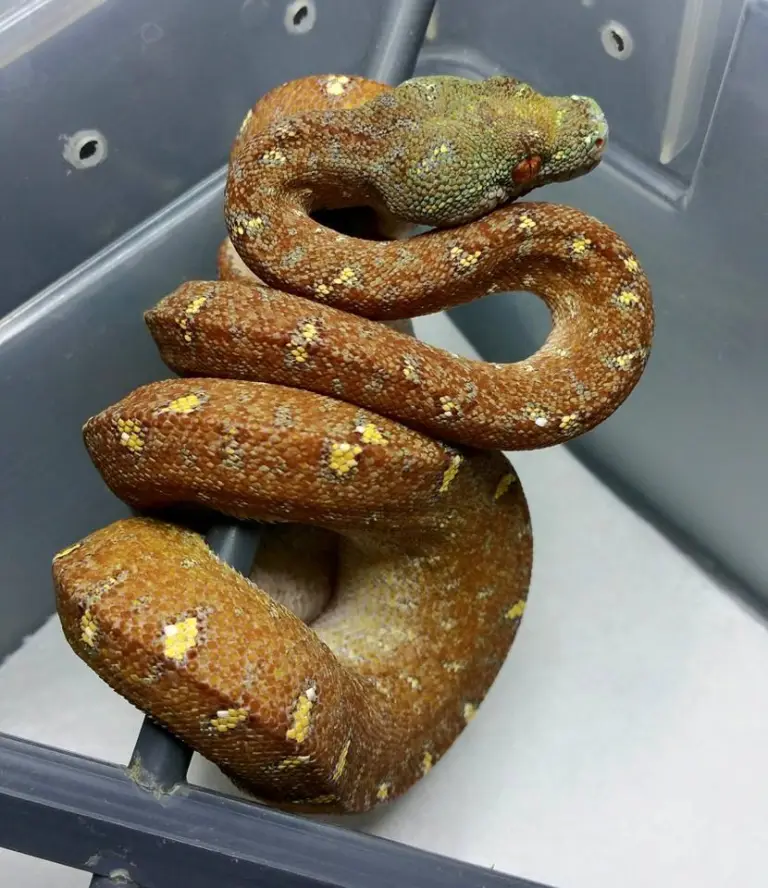
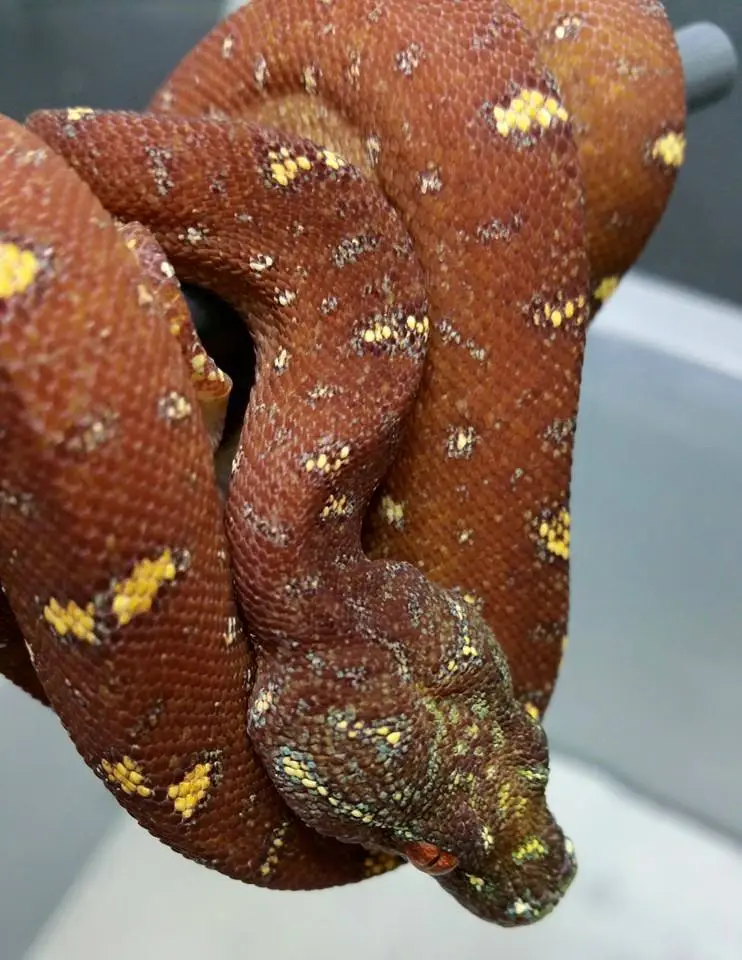
The differences between normal chondros and albino chondros can be very subtle in neonates, easily overlooked as "normal" by the untrained eye. It is not until the animal begins to mature and undergo ontogenetic color change that the differences become more apparent.
Three traits to look for when identifying an albino chondro:
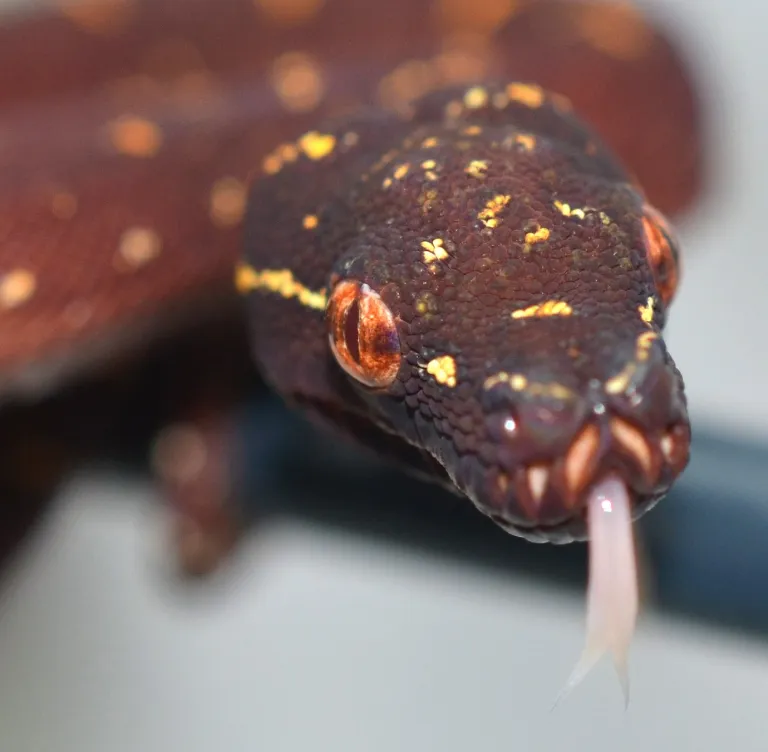
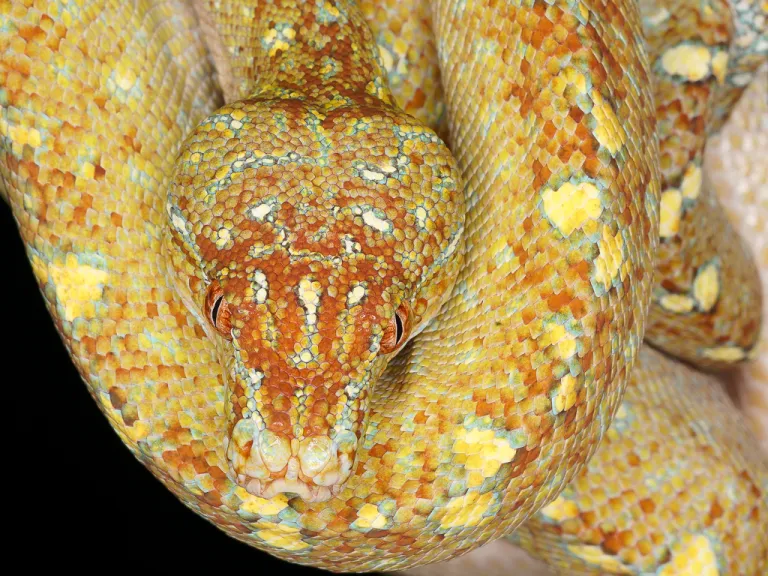
- Red pupils: The most distinctive sign, visible from birth.
- Pink/unpigmented tongue: In contrast to the dark tongue of normal animals.
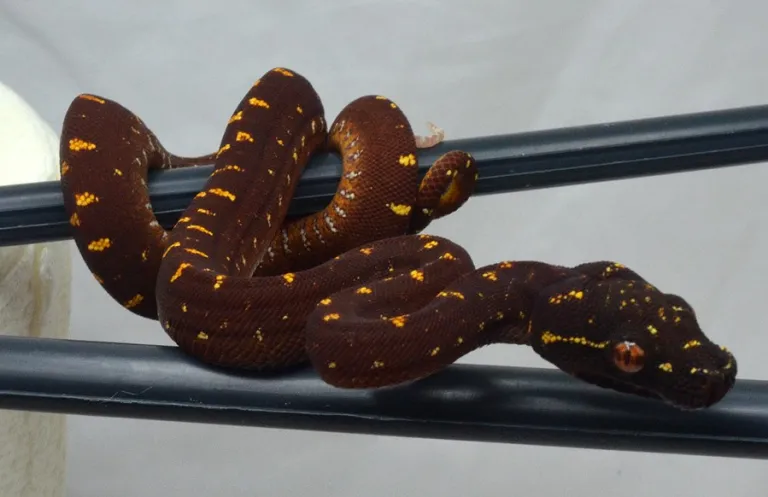
- Complete lack of black in the pattern: Even very dark red/maroon babies will have no black pigmentation.
Neonate Coloration
It should be noted that the "red baby" form of an albino chondro can be a very dark red or maroon. However, even with these dark babies, there will be no black in the baby pattern — a key indicator for identification.
Adult Coloration
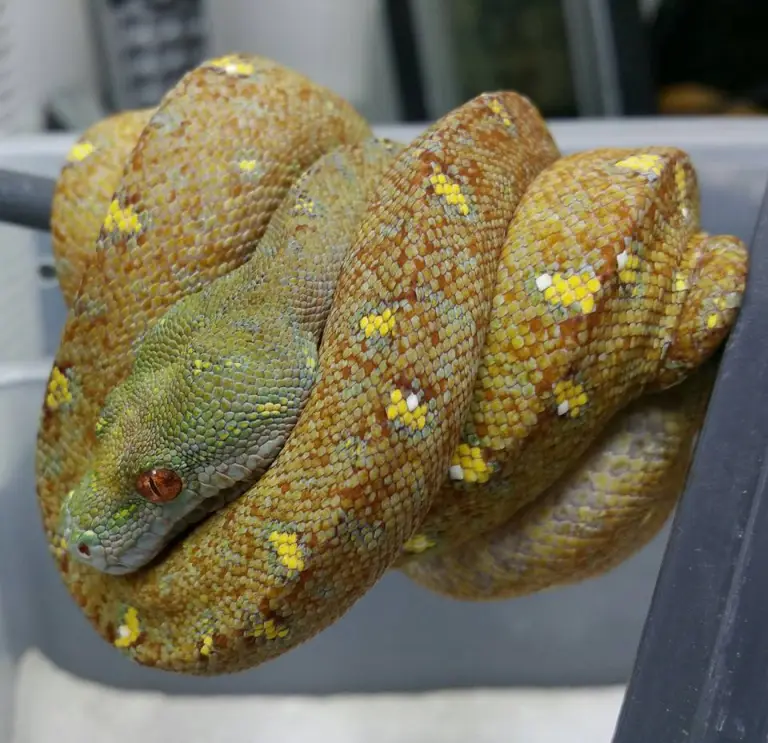
As albino chondros mature, they change to a golden yellow color (this seems to replace areas that would typically be green), with varying individual scales and patches of white, orange, and red (the areas where a "normal" animal would have colors other than green that make up any pattern).
Genetic Transmission
The albino gene in Morelia viridis is recessive, requiring two copies (one from each parent) to be visually expressed. Animals carrying only one copy are called "heterozygous" (het) and appear normal but can pass the gene to their offspring.
Founding Animals
- VPI/Bushmaster Meraukes (source animals)
- Floyd (first known albino, Damon Salceies line)
- Midas (second known albino, Trooper Walsh line)
- Versace (proven het, cornerstone of Marcial Mendez's project)
Gallery
7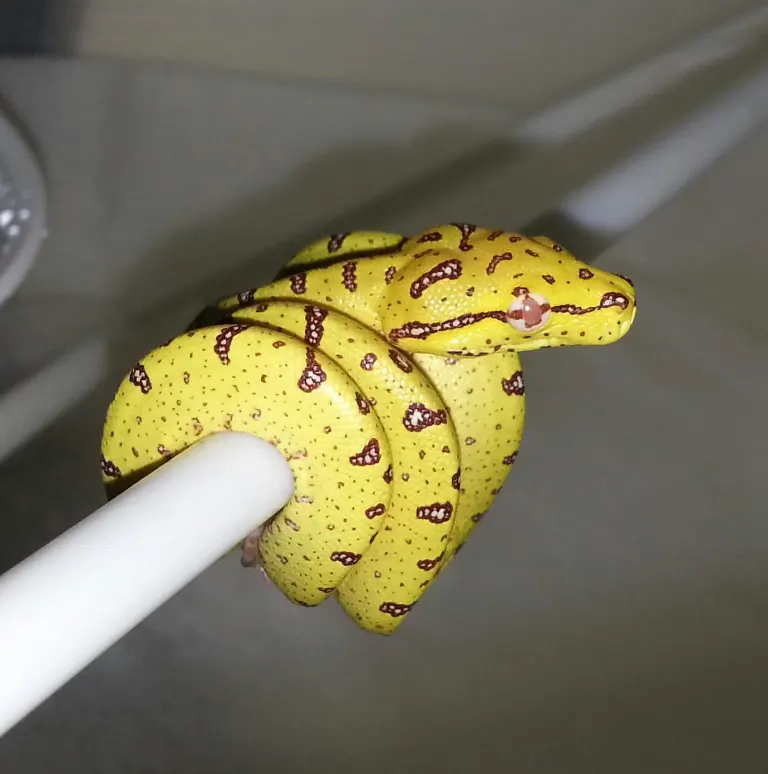
Other Designer Lines
4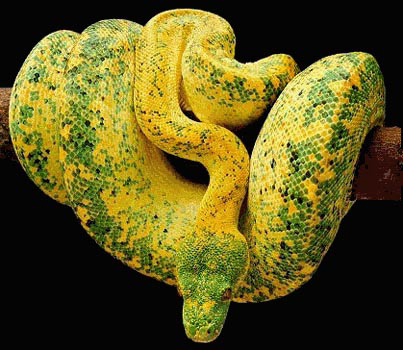

Published on December 23, 2025